
Character BROUGHT Model and Bobby Knight
An Addition to the Jubilee Center's Caught, Taught, and Sought Model

“We’re going to [win the national championship] with good people the right way” -Bobby Knight (Mellen, 1988).
Introduction
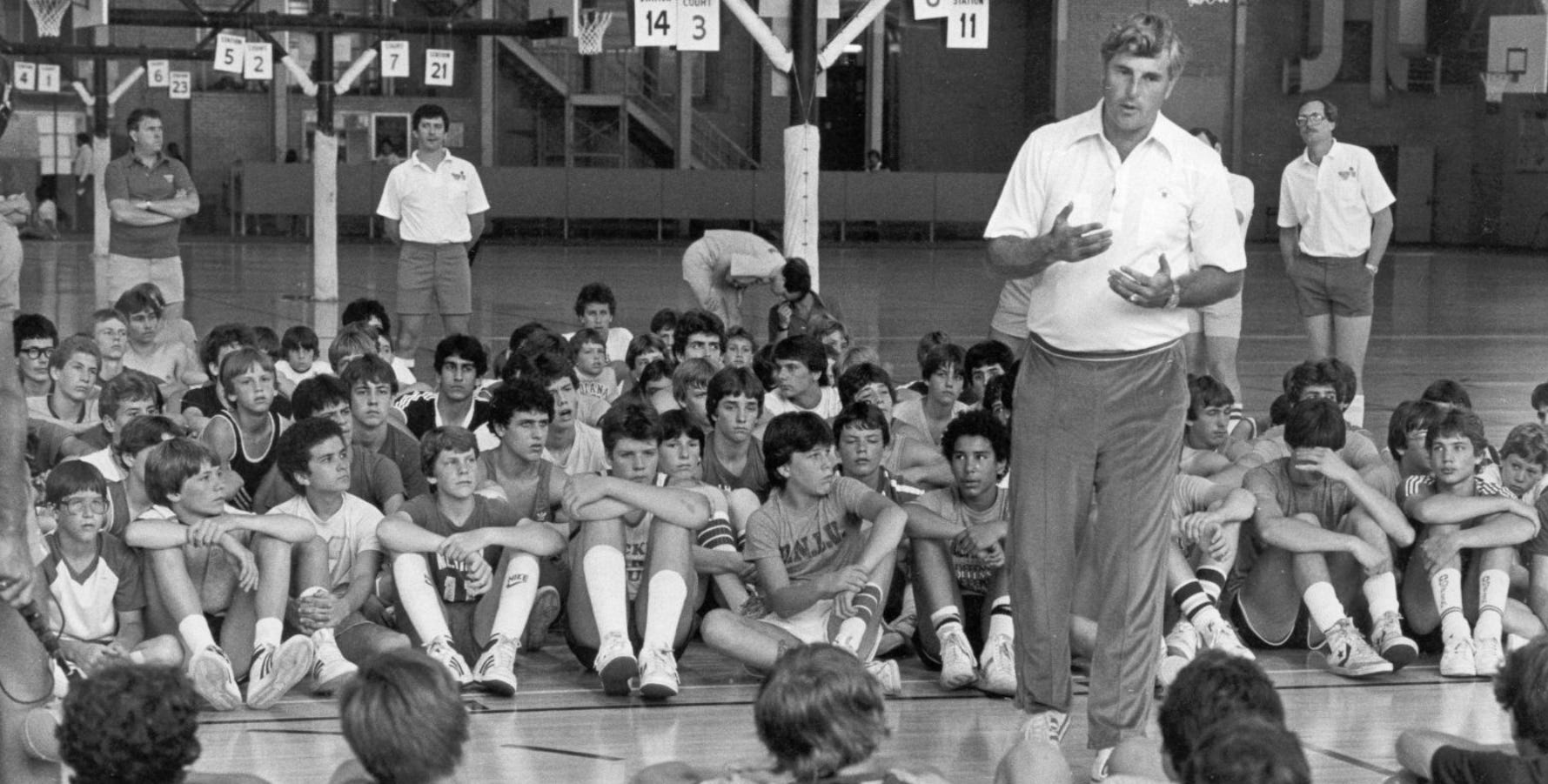
Growing up in Indiana, Bobby Knight wasn’t just a coach—he was a symbol of greatness. I remember my grandpa in his candy stripe pants telling stories of tough, disciplined, and resilient players due to his coaching style. The now-iconic chair throw made Knight an impressive legend who stands strong in what he believes in. It was almost taken for granted that this was what character development in sport looked like.
But as I got older, that narrative became more complex. I started encountering very different accounts—stories of volatility, fear, and players who experienced that same environment not as developmental, but as harmful (Antony et al., 2017). What struck me most wasn’t just the contrast, but the fact that both perspectives were talking about the same system. The same practices, the same expectations, the same coach. Even critics have acknowledged the discipline, intensity, and uncompromising standards Knight instilled, yet coaches like Mike Krzyzewski of the Blue Devils achieved equal success through nearly opposite methods built on trust, support, and relational leadership. So what explains the difference?
By many accounts, Knight was teaching character by demanding strict discipline and intensity from his players, who adopted his character expectations. And these weren’t unmotivated athletes; they were seeking growth, trying to improve, and absorbing what was modeled around them. In other words, character was being caught, taught, and sought. But if all of that was in place, why didn’t character education work the same way for everyone? Drawing on the Jubilee Centre’s (2026) new framework for character through sport, I argue we’re missing something: what athletes and coaches have brought into the environment.
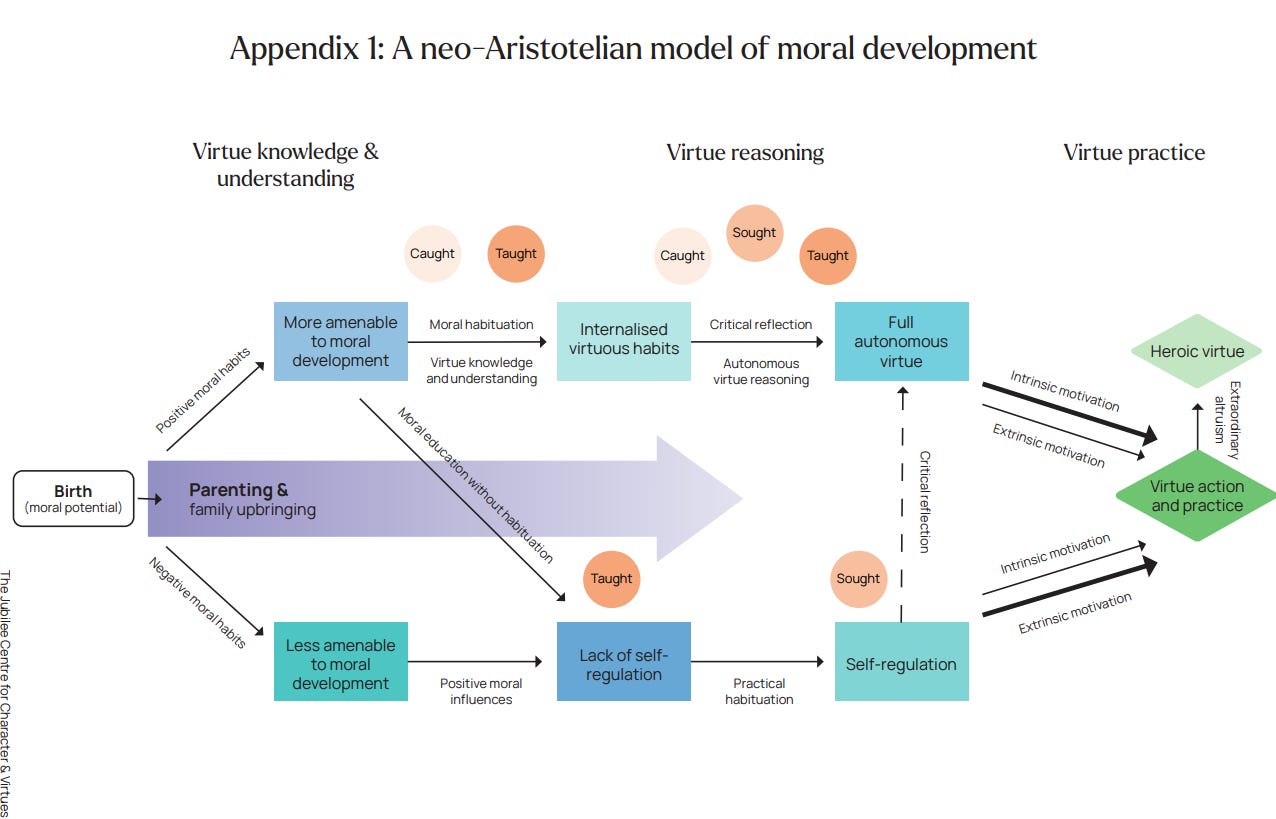
Character Caught, Taught, and Sought
To make sense of this tension, we can step back and consider how character is typically developed in different environments. The Jubilee Centre’s (2022) Framework for Character Education offers one of the most widely used models of character education, grounded in a neo-Aristotelian view of virtue. Rather than treating character as a single trait, the framework is organized into four interrelated domains: moral virtues (such as honesty, compassion, and integrity), intellectual virtues (including judgment, reflection, and critical thinking), civic virtues (like service, citizenship, and community awareness), and performance virtues (such as resilience, discipline, and teamwork). These virtues work together, guided by practical wisdom—phronesis—which enables individuals to navigate competing values and make context-sensitive decisions.
The framework also emphasizes that character is not fixed, but developed through experience, reflection, and social context. It highlights three primary pathways through which this development occurs: character caught, taught, and sought. Character is caught through immersion in an environment—through observing role models, absorbing norms, and participating in a shared culture. It is taught through explicit instruction, expectations, and the development of the language and understanding needed to recognize and apply virtues. And it is sought through the individual’s own motivation to grow, improve, and pursue a better version of themselves.
Building on this broader framework, the Jubilee Centre has recently extended its approach more directly into sport, emphasizing how athletic environments can serve as powerful sites for character formation. In Jubilee’s (2026) new Educating Character Through Sport framework, sport is not treated as a separate domain, but as an embodied context in which character is developed in real time. The same core principles remain: character is shaped through what is caught in team culture and relationships, taught through coaching practices and expectations, and sought through athletes’ own motivation to grow and improve.

Character Brought
Importantly, Jubilee’s model acknowledges that sport does not automatically produce good character. The same environment that cultivates discipline, teamwork, and resilience can also foster ego, aggression, or moral compromise, depending on how it is structured and experienced (Coakley & Montez de Oca, 2025; Schwecke, 2026). The same environment can cultivate strong character in some athletes while failing to do so in others, as seen in the contrasting experiences of players under Bobby Knight. So what makes that difference? If character is being caught, taught, and sought, why does it not develop in the same way for everyone?
My explanation of this missing piece proposes extending Jubilee’s “caught, taught, and sought” framework by introducing a fourth dimension: brought. In this model, brought refers to the temperamental and dispositional qualities individuals carry into an environment—those inborn or early-developed tendencies that shape how they respond to pressure, authority, and social dynamics.
Seminal support for incorporating a brought dimension into character education comes from Cloninger’s psychobiological model of temperament and character (Cloninger, 1993; 1994). In this framework, personality reflects the interaction between biologically based temperament and experience-shaped character. Temperament consists of early-emerging, partly heritable tendencies such as harm avoidance, novelty seeking, reward dependence, and persistence, that shape how individuals react to their environments. While character can be shaped through experience, it does not develop independently of temperament. This highlights the need for a more explicit biological perspective in character education, where what is “brought” helps explain why the same developmental environment does not produce uniform outcomes.
While character may be caught, taught, and sought, it is also constrained and enabled by what is brought by both coaches and athletes. The variability in athletes’ experiences is not simply a matter of motivation or environment, but of fit. Even when character is actively being developed, it will not develop in the same way for everyone—because not everyone brings the same capacities, sensitivities, or starting points into the process.
Conclusion
Perhaps the most telling part of Bobby Knight’s legacy is not that people disagree about him, but how deeply and persistently they disagree. As longtime Indiana sports journalist Bill Benner reflects, “I have a close friend with whom I can discuss amicably any subject under the sun. Except one: Bob Knight” (Benner, 2006). For some, Knight represents one of the greatest figures in Indiana University history; for others, he represents lasting damage. “I ultimately came to believe Knight did more damage to the university than he did great things for the university,” Benner admits, before concluding, “on these points, my friend and I have agreed to disagree.” These are not disagreements about different programs or different contexts—they are vastly different interpretations of the same environment. That tension suggests that character in sport is not simply produced by what is caught, taught, and sought, but by how those elements interact with what individuals have brought into the sport. Regarding Knight’s novel chair throwing strategy, some saw a clear failure of character—an uncontrolled outburst, a loss of composure, and a breakdown of discipline. Others, however, saw a reflection of character—intensity, conviction, and a refusal to back down. The difference may not have lied in the moment itself, but in the personality and temperament each athlete brought to the court.