

Evil Empathy?
In a surprising interview statement, Elon Musk claimed that “the fundamental weakness of Western civilization is empathy” (Wolf, 2025).
Most people reading this will recoil. Empathy is supposed to be the cure for polarization and dehumanization. If we could just understand one another better, surely we would fight less. And in many cases, that intuition is right.
But in other cases, empathy does not ease our divisions. It intensifies them. It fuels moral outrage, locks us into sides, and makes constructive disagreement feel impossible.
This asymmetry is not a flaw in empathy. It’s actually its defining feature. The word empathy comes from the German Einfühlung, which roughly means “feeling into.” Empathy was never meant to be a rational spreadsheet or a cost benefit analysis. It was meant to function as an emotional bridge, a way of entering into another person’s experience by feeling with them.
The problem is that we treat empathy as something to maximize, rather than something to train. Moral capacities, like physical ones, don’t improve simply by being pushed to their extremes. They improve through calibration — knowing when to engage, how intensely, and when to step back.

Empathy Deficit
It’s not hard to imagine someone with too little empathy, and it’s something researchers have studied extensively. Psychopathy, for example, is often associated with deficits in affective empathy, such that individuals may recognize others’ emotions without feeling distress, concern, or guilt in response. Across criminological research more broadly, lower levels of empathy, particularly forms related to understanding others’ perspectives and emotional states, have been associated with antisocial and aggressive behavior, though these relationships are modest and vary by context.
After pointing to cases where empathy appears deficient, it’s tempting to conclude that many of our social problems stem from a simple lack of it. This idea has even appeared in political rhetoric. Barack Obama famously warned of an “empathy deficit” in American society, arguing that our inability to see the world through others’ eyes was at the root of political polarization and moral breakdown. The implication was straightforward: if we could just cultivate more empathy, conflict would ease.
Addressing the empathy deficit is the more obvious moral move. It is easy to see how a lack of empathy can lead to indifference and harm. Most people already agree that understanding and caring about others matters, and many discussions of moral decline begin and end there. The idea that we simply need more empathy feels straightforward and intuitive.

Empathy Excess
The more difficult argument concerns excess. One of the central concerns raised by Paul Bloom (2016) is that empathy is powerful precisely because it is emotionally vivid, and therefore biased. Empathy functions less like a broad floodlight and more like a narrow spotlight. It shines brightly on a single person, story, or moment, while leaving much of the surrounding landscape in the dark. What falls inside the beam feels urgent and undeniable. What falls outside it can quickly fade from view.
Fritz Breithaupt (2019) takes this insight a step further by focusing on what happens once that spotlight locks onto a story. Empathy, he argues, doesn’t simply help us understand others — it pulls us into a narrative, aligns us with a particular character or side, and quietly recruits our moral emotions in their defense. Once empathy becomes tightly bound to a specific narrative, it also becomes easier to exploit, as Gad Saad (2025) has argued. Because empathy is widely treated as a moral virtue, expressing compassion reads as goodness, while skepticism can read as indifference or even hostility.
The issue is not that these appeals are dishonest. Often they are sincere. The issue is that empathy, once activated, does not naturally ask what else should be considered. Its strength lies in focus, not balance. Without other moral capacities stepping in, the spotlight stays fixed, and everything outside its beam becomes harder to see.

Exercising Empathy
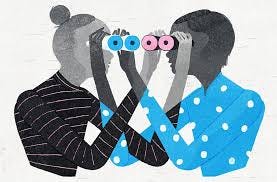
Empathy is a unique moral skill. It allows us to see others as fully human, not as abstract agents or data points, but as people like us. It connects us to what they might be feeling, and that connection gives us a kind of understanding that reason alone cannot produce. It is not just that we know something matters. We feel why it matters.
Pivoting to physical training, we easily see the consequences of highlighting one specific muscle alone. Problems rarely arise simply because a muscle is strong. They arise when training becomes unbalanced. Moral capacities work the same way. When affective empathy is repeatedly trained in one direction, fixed on a single story, a single face, or a single example of suffering, other capacities fall behind. Empathy becomes so narrowly trained that it begins to dominate moral decision making rather than support it.
Exercising empathy means resisting the tendency to focus all emotional attention in one direction. In many traditions of character education, virtues like empathy are not treated as traits to maximize indiscriminately, but as capacities that must be guided by judgment and moderated by context (see The Jubilee Center Framework or Lamb et al., 2021). This means learning when and how to engage empathy appropriately, rather than applying it passionately to a single situation. Different moral contexts call for different responses, and strong character depends on the ability to calibrate care to fit the demands of the moment.
Conclusion
A world with no empathy would be cold and morally thin. But a world governed entirely by untrained empathy would be unstable, reactive, and easily manipulated.
The answer is not to harden ourselves against feeling. It is to become more responsible users of it. Empathy should not be abandoned or suppressed; it should be exercised with care, balanced with judgment, and trained alongside other moral capacities that help us navigate disagreement and hold multiple perspectives at once. Used responsibly, empathy deepens moral understanding. Used without restraint, it narrows it.
Empathy is a moral muscle. Use it, train it, and know when to give it a rest day.
I still think that the definition of empathy that requires us to "put ourselves into somebody else's shoes obscures the simplicity of empathy, which comes first to expression in fully listening to another person. We don't have to guess; people will tell us when we truly receive them. Get out of the way and don't make it about how well you can feel into others, but open yourself, receive, and practice non-doing.